

Yeah, we all know you ain't going to get chocolate out of crap. I still think this could make an interesting topic, as there seems to be a bunch of members here who've got great results from subpar recordings.
I've most always recorded my own stuff, and as I really enjoy tracking and hunting sounds and mic choices/placements, I have to spend less time getting sounds while mixing. But now, I've been mixing a couple of projects that have been recorded by someone else, and with some very different approaches I'd aim for personally, like using a pretty dry and dead sounding wood snare for a rock track, XY overheads instead of a wider AB, or choosing a hihat spot mic instead of a mono room or snare bottom. And obviously with some stuff that's not done entirely "correctly" either, such as the tom tracks being recorded too hot and clipped, and the snare track with gratuitous amounts of ugly off-axis hihat bleed.
So obviously, the approach that needs to be taken with a project such as this, is not "dialing the bad stuff out" of the starting sounds, but instead getting stuff to sound good from a bad starting point. Polishing turds, if you will.
Besides using samples and reamping DI'd stuff (no DI's in this project BTW), I've noticed:
- That you can make mic'd acoustic guitars with too much room less obnoxious with a smooth but high HPF, and then modulation.
- Haas doubling can bigginate a lead guitar that's too weak on it's own, and also lives in the same range as vocals so cannot be in the center.
- Haas stuff on mono synth tracks too.
- Subliminal room reverb on the spot mics can compensate somewhat boring overheads.
- The hi-hat spot mic is actually a good sidechain source: try duplicating, strip silencing/gating and using it in bashing parts to compress overheads or the snare (especially if you're not gating/expanding it).
- Duplicate and strip silence the snare, nudge a few ms and use that to trigger the gate on a snare track. Old trick but still valid.
- Duplicate the snare, gate it so it's just a short spank and distort it. Boost the lows too. Maybe some reverb, maybe not. Sort of a ghetto snare bottom.
- Don't compress the snare, instead send to a bus for individual parallel compression. Gate and compress to taste, but use lightly so it doesn't make the dynamics go all weird.
- Lame programmed, electronic drums? Reamp them through a fuzz/distortion pedal and a battery powered Marshall amp, then mic that. Record it to a seperate track and blend it in a little bit.
- Reamp the guitar DI's through a fuzz pedal. They sound like crap on their own but can give some interesting presence when blended in.
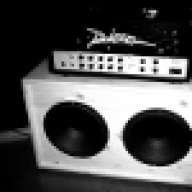
What are your own cool ideas you've used? My personal favourite is probably the Marshall MS-2, I always seem to get something interesting when running stuff through it.
I've most always recorded my own stuff, and as I really enjoy tracking and hunting sounds and mic choices/placements, I have to spend less time getting sounds while mixing. But now, I've been mixing a couple of projects that have been recorded by someone else, and with some very different approaches I'd aim for personally, like using a pretty dry and dead sounding wood snare for a rock track, XY overheads instead of a wider AB, or choosing a hihat spot mic instead of a mono room or snare bottom. And obviously with some stuff that's not done entirely "correctly" either, such as the tom tracks being recorded too hot and clipped, and the snare track with gratuitous amounts of ugly off-axis hihat bleed.
So obviously, the approach that needs to be taken with a project such as this, is not "dialing the bad stuff out" of the starting sounds, but instead getting stuff to sound good from a bad starting point. Polishing turds, if you will.
Besides using samples and reamping DI'd stuff (no DI's in this project BTW), I've noticed:
- That you can make mic'd acoustic guitars with too much room less obnoxious with a smooth but high HPF, and then modulation.
- Haas doubling can bigginate a lead guitar that's too weak on it's own, and also lives in the same range as vocals so cannot be in the center.
- Haas stuff on mono synth tracks too.
- Subliminal room reverb on the spot mics can compensate somewhat boring overheads.
- The hi-hat spot mic is actually a good sidechain source: try duplicating, strip silencing/gating and using it in bashing parts to compress overheads or the snare (especially if you're not gating/expanding it).
- Duplicate and strip silence the snare, nudge a few ms and use that to trigger the gate on a snare track. Old trick but still valid.
- Duplicate the snare, gate it so it's just a short spank and distort it. Boost the lows too. Maybe some reverb, maybe not. Sort of a ghetto snare bottom.
- Don't compress the snare, instead send to a bus for individual parallel compression. Gate and compress to taste, but use lightly so it doesn't make the dynamics go all weird.
- Lame programmed, electronic drums? Reamp them through a fuzz/distortion pedal and a battery powered Marshall amp, then mic that. Record it to a seperate track and blend it in a little bit.
- Reamp the guitar DI's through a fuzz pedal. They sound like crap on their own but can give some interesting presence when blended in.
What are your own cool ideas you've used? My personal favourite is probably the Marshall MS-2, I always seem to get something interesting when running stuff through it.