This paradigm is always mundane. If you like the way an amp sounds with or without a boost, does it really matter the cost if you like that sound? A Bogner boosted will not sound the same as a dual rec boosted, however one amp might have tonal qualities that the player likes more although they may not like it unboosted.
Tradition is what keeps TS circuits out of amps, the guys running Vox combos don't mind running pedals throughout there amps and the more metal amps have brighter gain stages in the front which act in the same way as a TS does however the manufacture also realizes that they will have players that will still want to use a TS and having the amp super tight without one would make the TS brittle, so they usually go for a middle area. If they player uses bright tubes and active pickups a TS usually won't be needed but with darker tubes a player could use a TS. Still with bother scenarios, a brighter amp that does not need a boost will still have different harmonics and openness than a darker amp with a boost which will be richer in the mids and more focused.
Placing a TS circuit in the amp would cost more money that not every player might not want, although many players that use distortion will use them, including most rock players under the sun, after all it was SRV that started using TS's as boosts. Some smaller amp brands do provide a built in TS because they are going for a niche market. You have to remember though that there are some "purists" out there that would turn up their noses if they even knew that a circuit they felt was inferior was in an amp because they feel TS ruins the natural characteristic of the amp and makes all amps sound the same garbage that they like to spew. With those purists in mind amp companies are trying to appeal to everyone. That's why amps designed for metal still have the hot-rodded Marshall topology as its core design. If that core design changes too much and its not something that sounds familiar (some Engl, Orange and Vox models for example), most will turn away except the niche of players that model was designed for. So even though an amp was made for metal it was designed to impress even say rock/blues/country players as well. I think its quite horseshit because rock and blues players get exactly what they want out of their amps, we metal guys should get our special sound from our amps.
If cost and appealing to a larger audience isn't an issue then adding a TS would make perfect sense. I am still in the design process of my first amp design and it has a built in OD circuit that has selectable Symmetrical/Asymmetrical clipping, Silicon/Germanium diodes, two programable and switchable tone controls, true bypass and all midi switchable. The circuit has also been improved upon in terms of the input and output buffers, meaning that when you actually use the OD, you are not getting the tone suck that you would from a pedal.
IMO adding a TS in the amp helps with reliability of your rig, that's one less piece of equipment plus wallwart and one less cable that would could go wrong in a live environment. Plus it helps with tidiness both live and in the studio. I am also sure that if the circuity where to be put into an amp, that the components used would be of higher quality so not only would the boost sounds better but would also be less noisy. The noise that is being picked up when you use a pedal is becuase its ground becomes an antenna, at the same time, your guitar it not grounded to the amp, its grounded to the wallwart (which will cause a small ground loop) or the battery. With the TS in the amp, the gutiar is grounded through the amp, and the OD circuitry is grounded through the amp and built inside the chassis making it a whole lot more quiet.








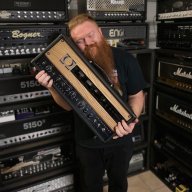

 BUT!! We are living times when all we want to hear is what we are used to hearing. We are using SM57 mics for mic'ing guitar amps and they are even cheaper than tube screamers. Sure there are more suitable mics for the job out there but everyone's using an SM57 since it's the industry standard.