The meaning of life

Bloopy

Active Member
Feb 10, 2008
3,316
2,108
113
New Zealand
www.bloopy.org
What's the meaning of life?

Those of us who are atheists would likely concur that there's no intrinsic meaning in life, and it's all just a tremendous accident. If anything exists outside of our universe, it's probably more universes containing equally baffled creatures. So, maybe the question needs rewording, eg.: What's the greatest meaning you can give to your life?

Just a reminder that this is a serious and mature section of the forum (outside of the bible basher threads :D). I wanna see a few paragraphs, not screeds of text copied and pasted verbatim from your favourite holy books.
 
If one doesn't think about a meaning, or live life looking for one that might be all the justification needed for them, without any explanations. But I suppose that wouldn't be enough for someone looking for answers, or a direction.
 
The answers to a question similar to yours could be hugely insightful. Not why a life has to have meaning, but rather why anyone would wanna give meaning to theirs. It's probably depends on how the individual feels. Eg. if one person simply enjoys figuring out a meaning to slap onto their life then maybe their meaning of life is to enjoy it. Whereas another who sees this search as a serious and satisfying pursuit may then find their meaning of life is to achieve satisfying accomplishments. Though most would probably then get philosophically greedy and claim their meaning is a combo of both and more.

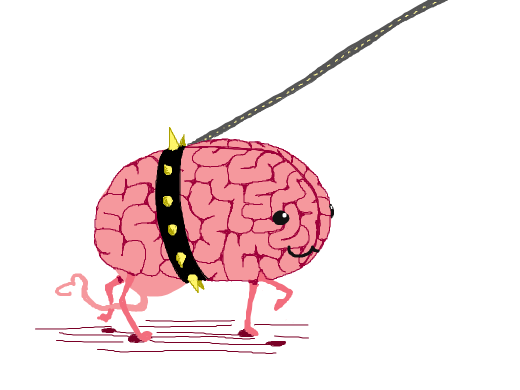
For me these sorts of things aren't a search for a direction. It's more about examining, deducing and defining things based on experiences of where one is at now. Reaching some kind of answer/conclusion can lead to feeling happier and more confident in making the same choices I probably would've made anyway. And if there's no answer to be found, I still enjoy taking my brain for a walk around the block.

x1Y8Xt0wO.png
 
You could also take the point of view that someone who spends a lot of time looking for meaning is actually looking for the wrong thing.
 
I`ve never thought about the meaning of the life, but perhaps it is happiness
 
The meaning of life is to seek and love the meaning of life as you discover and define it.
 
The meaning of life is to seek and love the meaning of life as you discover and define it.

I was an atheist for 15 years at the beginning of life. I have been studying religion philosophy spirituality consciousness for more than 15 years. Even if you’re an atheist there still has to be a meaning of life for you it doesn’t have to be God or religion based. Science is a wonderful thing that can help us understand how life works even down to the subatomic level so I’m sure for atheists that are also astrophysicists or quantum theorists, That their meaning of life is to understand life which is what they enjoy which is what makes them happy and it also contributes to our society.
On the other end of the spectrum you have the Abrahamic religions, And the catechism of the Catholic Church defines the meaning of life on its first page, to seek and love God. And I just want to say that the term paganism is a load of crap. If you look at One of the oldest religions on earth that’s still around today that would be Hinduism, which I have studied in depth for years and is part of the culture Of where my parents are from, most people including some Indian people practice it and believe that it is a pagan religion which it is not. Each of the different gods are simply different aspects of one God and this is the true deeper teaching of Hinduism, and from what I’ve seen, This goes for all the other religions and ways of life throughout the world that have been falsely labeled pagan.
As humanity grows and evolves certain institutions of social control will no longer be needed. Sadly the great things that were taught by great teachers have been used by religion for some bad stuff.


happiness isn’t truly experienced unless it is shared. Shared with others and with life itself. and that involves seeking and discovery. This involves stepping outside of yourself, outside of your ego. And ego here I’ll define as identification with form. And that means the subtler forms of thoughts and emotions. If you learn not to act on your thoughts and your emotions then you’ll find an underlying observer and flow within you and in life. Each of us is the universe that wanted to be aware of itself and thus created the means To meet its self in you, and us in each other. And that’s love.
 
I finally figured out the Bloopy answer. As I said, I'm basically atheist and I don't think there's any inherent meaning to the universe, at least not one we can discover. So meaning as I know it is something created by the brain. At every level, the brain interprets signals to make sense of them, from hearing a simple humming sound, to feeling a complex mood based on a variety of factors. Following that train of thought, the meaning of life would be something like the overarching interpretation that arises when one ponders life as a whole.

So when I meditate on the entirety of existence and life as we know it, what sense does my mind make of it? That it's everything. It's tragic, it's entertaining, it's venerable or absurd, overwhelming or underwhelming, serendipitous or zemblanitous, it's like being inside a computer or labyrinth, it's a toy to play with, it's like being a slave to events beyond your control yet having the freedom to do anything within the bounds of physics and/or society, it's a chance to leave a legacy or even try to leave no trace at all. The meaning of life is the infinity of possibilities. Once I worked that out then I realised other friends had said the same basic thing in different words, including my ex who considers this meaning a core part of her identity. Funny knowing the Bloopy answer was already right in front of me since 6 years ago.

Philosophers get caught up on separating out different definitions of "meaning", particularly 'purpose' vs 'making sense of'. However, I think purpose is just more layers of interpretation. If someone finds a strong purpose, that helps them fill in the details of how existence makes sense to them. Or in my case I can take what sense I've made of life and ponder some ideas on top of that for my brain to conjure up a purpose.

I realise I may have a bit of a non-answer here. What it is is that it's possible, because if it wasn't, nothing would be...

The meaning of life is to seek and love the meaning of life as you discover and define it.
This line is even more of a non-answer given it's a circular definition. You go searching and discover the meaning of life is to go searching and discover the meaning of life, finding that it's to go searching and discover the... 😵‍💫 Also, re: science, "how life works" & why it all exists are two very different questions. Sure, a scientist is most likely happy contributing to society, but an explanation for why that's the 'meaning of life' would still very much up to philosophy. Not merely a matter of presenting the scientist's work. More scientists might say the beauty is that we don't know the 'why' and leave it at that.

 
I'm a former professional philosopher, current psychologist, and perpetual depressive, so I've thought a fair bit about this. I'll give you a short, relatively firm and disappointing answer (for those hoping for something exotic and sexy) followed by a more measured, longer discussion. I'll also assume that you are a reasonable person, i.e. that you are an atheist.

Short answer: The jejune, short answer is that the meaning of life is happiness. If you are actually asking a question about meaning--with the urgency characteristic of these conversations--then what you are really asking is, why should I put up with the suffering of life? The answer is that you shouldn't. A life full of suffering isn't worth living. The reason you shouldn't kill yourself is that you can live a happy life. If you are unhappy, your basic psychological needs aren't being met. This is usually because you don't have enough healthy relationships, but it might also be that you don't have a vocation. Figure out how to build and maintain relationships, and find some sort of calling (an actual job or hobby) and you will be happy. Any questions about meaning become academic after that point.

Longer answer: All* of the objections to the position that the meaning of life is happiness involve pointing out the counter-intuitive implications of the view. For example, imagine that Jeffery Dahmer was a happy person. He just loves killing folks and whatnot, so he's as pleased as punch about his life. Of course, common sense suggests that he did not live a meaningful life. Consequently, happiness must not be the sole sufficient condition for meaningfulness. Theorists typically suggest here that there are moral/ethical# constraints on the type of life that can be meaningful. Of course, you can go that way, and Susan Wolf is a particularly good proponent of this view, but I think there is a better option. Metaphilosophically, one should always approach a philosophical question by analysing the meaning of the terms in the context in which the question is asked. Yes, we want to know what meaning is, but what do we mean by "meaning"? Almost all philosophical questions involve a vague term which we try to interpret independently of context. That is, we try to develop an account of the meaning of the term that would apply to any context. However, meaning, knowlege, free will, etc. all developed in a work-a-day context that wasn't concerned about vagueness. Consequently, they mean different things in different contexts. Why shouldn't I kill myself? and What kind of life is admirable? are different questions, and which one you are actually asking depends on the context. If the context is that I'm wondering whether to kill myself, then the plausibility of the answers is going to be very different from one in which I am wondering whether I have lived an admirable life. If you get clear about the actual questions, then the plausible answers are clearer. So, I assumed in my short answer that the context is someone wondering whether their life is worth living, whether the juice is worth all the squeezing. The answer is that it is, you just haven't been doing the squeezing right.

*I should actually say that most of the objections, but I'm trying to keep this realtively short.
#I use ethical here to point out constraints that are more general than merely moral. We often think of moral things as having to do with our treatment of other people. I'm using ethical to mean more general things about how we act, possibly independently of moral rules. For example, many suggest that a life doing something like spending your life making sure every blade of grass on your lawn is exactly the same height is meaningless, even if it brings you great happiness. A meaningful life must invole something more substantial, like developing your own capacities (most existentialists and those above who say that meaning is what you make of it).
 
  • Like
Reactions: Bloopy