GMD Poll: Opeth’s Discography Ranked

Eh, Deliverance is a bit of a nothing album. It followed up their commercial breakout album in BWP, but just doesn't have all that much going for it. Wreath drags on for a while without doing too much of note. Deliverance, A Fair Judgement & Master's Apprentices are all good songs. But then you have For Absent Friends, which is unremarkable, & By the pain I see in Others, which kind of gets spoiled by the vocal FX & doesn't really have that many memorable moments. Lopez's drumming is the best part of the album.
 
Deliverance makes it in at 6th eh.
Sorry but lol. Just lol. That someone would have it at 2 or 3, why not. But there are 5 Opeth albums better than Deliverance are there, wow, what a fkng band.
Wreath and By the Pain are not up neither to the best tracks of the album, nor the best tracks of the previous ones.

Deliverance also suffers from the clinical production, which don't fit Opeth at all (and they repeated the mistake on GR). Deliverance and Masters are the highlights, especially Lopez' drumming on those songs.
 
Wreath and By the Pain are not up neither to the best tracks of the album, nor the best tracks of the previous ones.

Deliverance also suffers from the clinical production, which don't fit Opeth at all (and they repeated the mistake on GR). Deliverance and Masters are the highlights, especially Lopez' drumming on those songs.
Comment that makes sense to me. I wouldn't have thought of it as clinical although it's of course a lot more accurate than the previous records, which just come across as mild and ordinary to me.
I don't see much difference in the production betw Deliverance and BWPark though, the latter which definitely garnered a fairly unanimous opinion generally. And Deliverance still sounds organic, and the song writing is incomparably superior to previous records where Akerfeldt and co. reached a peak of maturity (after which they gradually declined I'd say). I can understand the opinion BWP is their peak, but I maintain those two records are the ones where Opeth become Opeth officially, there really isn't a whole lot musically in those previous albums that is that unique or unparalleled. But around the BWP and Deliv years, NOBODY sounded like Opeth, they were entirely unique. There are pretty weak songs on BWP too, not just Deliv., but I'd say those weaker songs fit the tone of the albums anyways.
 
BWP was way better produced than Deliverance. It just sounds far better and fitting.
I suppose. I can agree with that. Although the production wasn't brilliant on Deliverance, I'd say it benefited from sounding plain. There are no superfluous studio tricks or anything, there's a natural simplicity in the sound. You can hear each instrument perfectly, in some parts the bass is playing a very distinct line, the drums are totally separate from the rest of the rhythm section, the vocals also... it's plain and clear. Ghost Reveries had a bigger production, sounded wider.

So I guess even from a production standpoint one could consider BWP to be the magnum opus, over Deliverance, although that isn't my sentiment.
 
here's an example of the clarity on that record:


Outro at 9:05. You can clearly distinguish three separate melodies occurring simultaneously. The rhythm gtrs playing the chords, the octave chord melody, and then clearly the (brilliant) bass. Three totally separate melodic lines. Drums are crisp, they don't form a mess in the background despite the melody-heavy foreground.
 
Nothing really special about that. Orchid is full of interlocking counterpoint melodies.
 
here's an example of the clarity on that record:


Outro at 9:05. You can clearly distinguish three separate melodies occurring simultaneously. The rhythm gtrs playing the chords, the octave chord melody, and then clearly the (brilliant) bass. Three totally separate melodic lines. Drums are crisp, they don't form a mess in the background despite the melody-heavy foreground.

Deliverance is too clean for its own good. BWP was clear enough, yet the mix was more atmospheric oriented, which helped the album to be better received.

Even if Lopez' drumming was certainly spectacular in every album, both Deliverance and GR hindered some of his sound due heavy compression. Jens Bogren in particular compresses the snares and overheads way too much.
 
All you need to do is listen to what Akerfeldt, Lingdren & DeFarfalla are doing on the first two albums.
 
All you need to do is listen to what Akerfeldt, Lingdren & DeFarfalla are doing on the first two albums.
No, give me an EXAMPLE please not the vaguest possible instruction. I've listened to the stuff before and naturally gravitated towards early 2000's Opeth rather than 90's Opeth. Give me a specific example.
 
No, give me an EXAMPLE please not the vaguest possible instruction. I've listened to the stuff before and naturally gravitated towards early 2000's Opeth rather than 90's Opeth. Give me a specific example.

Second half of The Night and the Silent Water
Ending harmony on To Bid You Farewell
Around 0:30 in Under the Weeping Moon
Folky harmonic riff around 3 and half minutes on Forest of October

Pre BWP:
Verse riff on The Amen Corner
Verse riff on Demon of the Fall
Around 4:30 and last riffs on When
Every heavy riff on The Moor
Around 1:00 in Godheads Lament

and so on.
 
  • Like
Reactions: jimmy101
Second half of The Night and the Silent Water
Ending harmony on To Bid You Farewell
Around 0:30 in Under the Weeping Moon
Folky harmonic riff around 3 and half minutes on Forest of October

Pre BWP:
Verse riff on The Amen Corner
Verse riff on Demon of the Fall
Around 4:30 and last riffs on When
Every heavy riff on The Moor
Around 1:00 in Godheads Lament

and so on.
difficult to make a relevant post answering this as there's too much to reply to.
Lsnd to each reference listed. I'd reiterate my sentiment for the early Opeth stuff posted here: it's romantic prog metal with a mildness about it, it's pleasant but rather if not totally forgettable, interchangeable composition. I would say it's evident to me Akerfeldt was searching, reaching for sth but not there yet, and the song-writing improves tenfold in the later records.

The stuff from 'My Arms, Your Hearse' is closer to the definitive/ripe Opeth sound that would be displayed on BWP/Deliverance/GR. I'll be lsng to that one over the week.
But the individual parts are generally much catchier and more mature musically on those latter albums to me. I don't see anything definitely better than the stuff on Deliverance, the parts there are nearly all memorable.
 
Dude, just fuck off. You have such shitful opinions on everything.
Nah sorry Mr. Communist, you fuck off on this one. I'm going to go ahead and exercise my freedom of opinion. You and Putin can make nice and have fascinating talks on who and how you'd like censor, but me, I'm going to just lay out my thoughts on this online discussion forum. You're welcome to contest, but take the rest of that shit and shove it up there.
 
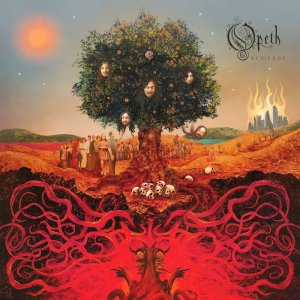
14. Heritage

Opeth Heritage.jpg

Opeth hit the reset button with Heritage and the results are predictably rough. Mikael had wanted to freely explore his prog rock influences and the homage he paid to that "heritage" was to the detriment of Opeth's unique sound. While some of the early criticism focused on Opeth's abandoning of growled vocals, the bigger issue here is that many of the parts or songs are just not interesting. It's still OK with a few good songs, and I've come to appreciate any opportunity to hear Mikael sing and play, even if it's not what I would've hoped for musically.

Highlights: I Feel the Dark, The Devil's Orchard, Folklore

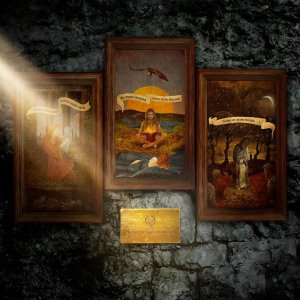
13. Pale Communion

Opeth Pale Communion.jpg

Heritage was such a departure that each Opeth album afterwards made small strides back towards a more coherent sound and better songwriting in the new style. Unfortunately, it also confirmed a pattern in the prog rock albums of starting with two or three strong tracks that are more well put together and then experimenting with songs that proved to be ultimately weaker causing the albums to drag towards a less riveting conclusion. The first few tracks here are the best with "Eternal Rains May Come" emerging as one of the best songs from the four prog rock albums.

Highlights: Eternal Rains May Come, Cusp of Eternity, Moon Above, Sun Below

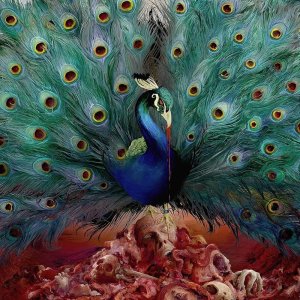
12. Sorceress

Opeth Sorceress.jpg

Sorceress is probably the most egregious example of what I mentioned regarding Pale Communion. It starts off incredibly strong and gives hope of consistent quality, but then fizzles down the back half. Those early tracks are good enough to propel it just past the marks of it's immediate predecessors. It's a little bit more fun (the title track) and prettier (Will o the Wisp) but isn't quite there collectively.

Highlights: Sorceress, Will o the Wisp, The Wilde Flowers

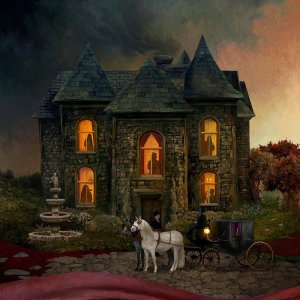
11. In Cauda Venenum

Opeth In Cauda Venenum.jpg

On Pale Communion and Sorceress, the band continued to develop their prog sound in a way that sounded more distinctively like Opeth and In Cauda Venenum furthered that trend (although something was still missing...). Fortunately, the album broke the trend of the previous three by putting together a total package that maintains greater consistency from beginning to end. Looking back, it's evident that the album nicely brings this era to it's fruition allowing it to also serve as the springboard to something new.

Highlights: Lovelorn Crime, Heart in Hand, Universal Truth

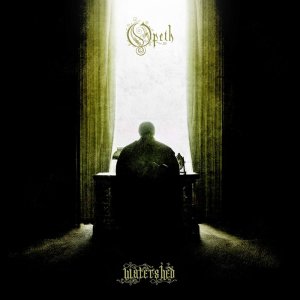
10. Watershed

Opeth Watershed.jpg

Watershed certainly represents a band caught in a difficult phase of it's existence. The loss of Lopez and Lindgren looms over this album as the classic era (1998-2005) came to a close. Mikael, too, was caught between the rock of the band's history and fan expectations and the hard place of his desire to embrace the call of prog rock. Considering the circumstances, Watershed is actually a really good album. Much of the charm of the old Opeth is still present in the songwriting here. Most of the songs are dynamic, interesting, and fun to listen to. The prog rock component and use of keyboards has increased further though not artificially or obnoxiously so (despite my preference for Opeth's more Metal side). The Metal components here are strong, though the production is a bit thin. Watershed ultimately lives up to its name as a dividing point in Opeth's discography. I rate it a cut below all of the albums that came before it but a cut above those that came after...or I did until recently...

Highlights: Heir Apparent, The Lotus Eater, Burden

The next five coming soon...
 
9. The Last Will and Testament
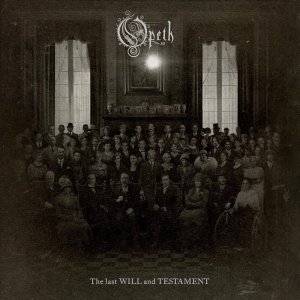
Opeth The Last Will and Testament.jpg

This album rekindled my love for Opeth. While some have called it a "return to form," it's not quite that. The Last Will and Testament has more in common with In Cauda Venenum than the classics. What the album demonstrates, however, is that the growls and heavy riffs actually did matter - not just for the fans, but for Mikael as a composer. On the previous four albums, he was intentionally operating without much of his repertoire. The Last Will and Testament proves how needless and damaging that was. The album is still deeply rooted in the prog rock developments, but hits harder, is far more dynamic, and sounds completely like Opeth once again. I suppose this is the journey Mikael felt he needed to take to get to the point where he could reconcile all of his influences. In some interviews around Heritage, Mikael made comments about the closed-mindedness of Metalheads and the band toured on exclusively soft songs almost out of spite. Now, with The Last Will and Testament, Mikael seems to have embraced all of himself and when I saw the band again in 2026 they played almost entirely songs from the classic era with a few from the new album and Mikael has said he wants fans to leave feeling that they've seen a great show. It's a new era in Opeth's history that I'm glad to see. I have The Last Will and Testament dead even with the next two albums on my list which I've placed ahead of it in part due to nostalgia. We'll see if this album moves ahead of them in the ensuing years.

Highlights: §2, §5, §6

8. Damnation
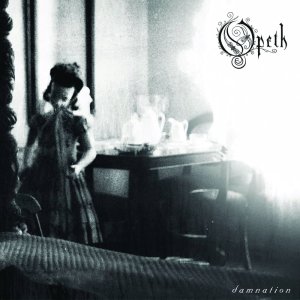
Opeth Damnation.jpg

I discovered Opeth in early 2003 when Deliverance and Damnation were the newest albums and I bought them together with Blackwater Park. That "Steven Wilson" era will always hold a special place for me. Damnation, of course, was intended to be part of a "light" and "dark" double album and thus, at the time, the idea of an album made-up of only the softer side of Opeth was considered a one-off. Even though there are obvious comparisons that can be made with what came after Watershed, Damnation actually has little in common with the later prog rock era. It's progressive, but still firmly rooted in Metal and Opeth's classic era identity. Thus, it fits seamlessly into Opeth's classic catalogue. The album's clean guitar tone, some of Mikael's best vocals, and the soulful drumming of Martin Lopez combined with interesting songwriting elevate the album over any of the later prog rock albums.

Highlights: Windowpane, In My Time of Need, To Rid the Disease

7. Blackwater Park
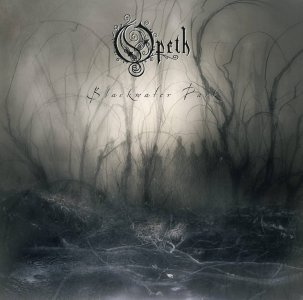
Opeth Blackwater Park.jpg

I probably have a more complicated relationship with Blackwater Park than any of the other Opeth albums. I do love a lot about the album, it was quite recent when I discovered the band, and it's largely regarded as their best. Perhaps the latter is why I've had this conundrum. I've always thought that Blackwater Park is overrated. It's not better than it's immediate predecessors, but seems to have just been released at the right moment for the band. There is no doubt that some of Opeth's best songs reside here, especially the phenomenal opening and closing tracks. Where I think Blackwater Park is a bit weaker than some of Opeth's other great albums is that, outside of the title track, the back half is substantially weaker than the first half. I have come to appreciate the album more and more in recent years and do consider it a great album, but in a stacked discography, I think it fits more in the middle.

Highlights: Blackwater Park, The Leper Affinity, Bleak

6. Orchid
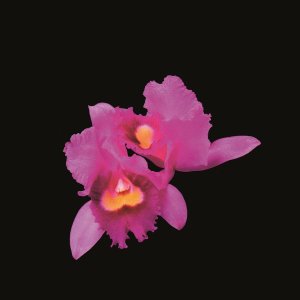
Opeth Orchid.jpg

Here's where it gets difficult and why ranking the Opeth albums has always been a hard (and ever changing) task for me. I think that out of the remaining six albums, I've considered each of them my favorite at some point. I place Orchid here because the instrumentals don't do much for me and the band had not yet developed their peak sound that would come after the first two albums. Later, the songwriting would become more coherent and memorable. Still, Orchid has a certain charm and atmosphere that is unique in Opeth's catalogue and it sounds perennially fresh no matter how much time passes or how many times I listen to it.

Highlights: The Twilight is My Robe, In Mist She Was Standing, The Apostle in Triumph

5. Morningrise
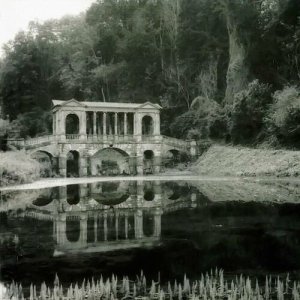
Opeth Morningrise.jpg

I'm a bit surprised to have Morningrise in fifth right now. It's an album that has often been first or second for me. When I got into Opeth, Morningrise and Orchid had a mystique that has never really gone away. The albums were expensive and hard to find and I treasured those first copies when I found them. The sophomore album is a bit more cohesive and refined version of the debut's formula. It's also a bit colder in atmosphere and sadder in tone. I would argue that it's the most emotive of all of Opeth's albums, which is a particular strength of the band's earliest phase. There are some moments in the first few tracks that meander, but I consider the last two songs among the best thirty minutes of music that I've heard.

Highlights: Black Rose Immortal, To Bid You Farewell, The Night and the Silent Water

Next up, the final four...