
SonOfNun
Bill Ward's Red Pants
4. Still Life
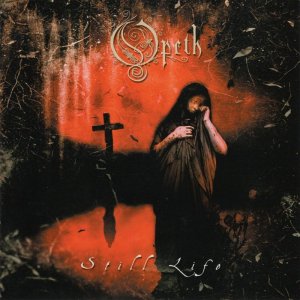
I think a case could be made that Still Life is the objective peak of Opeth's discography. It's got everything. The Opeth sound has been fully realized, the songwriting is undoubtedly some of Mikael's best, and it nicely executes a concept - an Opeth staple. The Moor is the perfect Opeth song. Many times, I've considered Still Life my personal favorite as well. At this point, parsing between the albums is really splitting hairs. What softer tracks there are on the albums ahead on this list I like slightly better, and I've never been a huge fan of the closer.
Highlights: The Moor, Godhead's Lament, Moonlapse Vertigo
3. Ghost Reveries
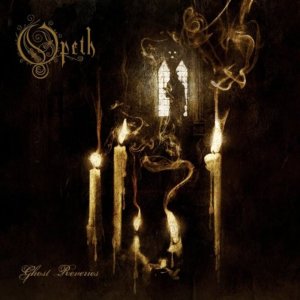
I reviewed Ghost Reveries for UM when it was released in 2005. I gave it a near perfect score, which ruffled some feathers, but after more than twenty years, I stand by it. After the experiment of a "light" and "dark" double album, Ghost Reveries brought both sides together again, yet produced something different - a slight evolution in Opeth's sound. It's a little more progressive, a bit more focused on the melodic (with some of Mikael's best vocal lines), and crafts a warm atmosphere that is unlike most of Opeth's work. I love everything here and it's perfectly sequenced for an optimal listening experience. Harlequin Forest is one of my favorite songs and I adore the softer tracks here, especially Atonement and Hours of Wealth. Even if Mikael was the primary (usually only) songwriter by this point, I don't think this album would sound the same with any other drummer and I think the loss of Martin Lopez (and Peter Lindgren) after this album was a real tragedy.
Highlights: Reverie/Harlequin Forest, Ghost of Perdition, Beneath the Mire
2. Deliverance
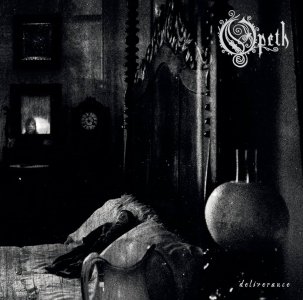
I know that there are few who will agree with this placement, but Deliverance was not only the first Opeth album that I ever heard, it was the first real Metal album that I ever bought. I will never forget listening to a sample of Master's Apprentices and being floored by that heavy opening riff and Lopez's double bass drumming. When Mikael's growls hit, I knew my life was forever changed. Although Deliverance was billed as Opeth's "heavy" and "dark" album, it was not a full-on Death Metal record. However, when listening through Opeth's discography from Still Life to Blackwater Park to Deliverance there is a qualitative shift on the latter to a more aggressive riffing style that really does give the album a sharper edge than most of Opeth's work. Master's Apprentices remains a favorite of mine and a song I know by heart. A Fair Judgement is probably my favorite Opeth song without growls and the part where Mikael and Peter trade guitar solos in the middle is exquisite. The title track, of course, has become the band's closer at live shows with it's entrancing final section. I even love the experimental closer, By the Pain I See in Others.
Highlights: Master's Apprentices, A Fair Judgement, Deliverance
1. My Arms, Your Hearse
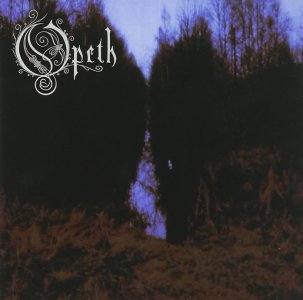
Over the last several years, Opeth's third album My Arms, Your Hearse has ensconced itself in the number one position. Despite Deliverance's billing, this record is probably Opeth's most aggressive. It's also, perhaps, the band's most consistent and direct with no song over ten minutes in length. Excluding the brief interlude that is Madrigal, the run of tracks from April Ethereal through When, The Amen Corner, and Demon of the Fall is unmatched. Mikael wanted to move away from the twin guitar harmonies of the first two albums and write something heavier and more concise and fully accomplished that here. Opeth discovered their sound and came out of the gates swinging with a dark, cold, and heavy album. The concept in the lyrics is executed better than any other Opeth concept album. The result is the best album of 1998, my favorite Opeth album, and one of my favorite albums of all-time.
Highlights: April Ethereal, When, Demon of the Fall
I think a case could be made that Still Life is the objective peak of Opeth's discography. It's got everything. The Opeth sound has been fully realized, the songwriting is undoubtedly some of Mikael's best, and it nicely executes a concept - an Opeth staple. The Moor is the perfect Opeth song. Many times, I've considered Still Life my personal favorite as well. At this point, parsing between the albums is really splitting hairs. What softer tracks there are on the albums ahead on this list I like slightly better, and I've never been a huge fan of the closer.
Highlights: The Moor, Godhead's Lament, Moonlapse Vertigo
3. Ghost Reveries
I reviewed Ghost Reveries for UM when it was released in 2005. I gave it a near perfect score, which ruffled some feathers, but after more than twenty years, I stand by it. After the experiment of a "light" and "dark" double album, Ghost Reveries brought both sides together again, yet produced something different - a slight evolution in Opeth's sound. It's a little more progressive, a bit more focused on the melodic (with some of Mikael's best vocal lines), and crafts a warm atmosphere that is unlike most of Opeth's work. I love everything here and it's perfectly sequenced for an optimal listening experience. Harlequin Forest is one of my favorite songs and I adore the softer tracks here, especially Atonement and Hours of Wealth. Even if Mikael was the primary (usually only) songwriter by this point, I don't think this album would sound the same with any other drummer and I think the loss of Martin Lopez (and Peter Lindgren) after this album was a real tragedy.
Highlights: Reverie/Harlequin Forest, Ghost of Perdition, Beneath the Mire
2. Deliverance
I know that there are few who will agree with this placement, but Deliverance was not only the first Opeth album that I ever heard, it was the first real Metal album that I ever bought. I will never forget listening to a sample of Master's Apprentices and being floored by that heavy opening riff and Lopez's double bass drumming. When Mikael's growls hit, I knew my life was forever changed. Although Deliverance was billed as Opeth's "heavy" and "dark" album, it was not a full-on Death Metal record. However, when listening through Opeth's discography from Still Life to Blackwater Park to Deliverance there is a qualitative shift on the latter to a more aggressive riffing style that really does give the album a sharper edge than most of Opeth's work. Master's Apprentices remains a favorite of mine and a song I know by heart. A Fair Judgement is probably my favorite Opeth song without growls and the part where Mikael and Peter trade guitar solos in the middle is exquisite. The title track, of course, has become the band's closer at live shows with it's entrancing final section. I even love the experimental closer, By the Pain I See in Others.
Highlights: Master's Apprentices, A Fair Judgement, Deliverance
1. My Arms, Your Hearse
Over the last several years, Opeth's third album My Arms, Your Hearse has ensconced itself in the number one position. Despite Deliverance's billing, this record is probably Opeth's most aggressive. It's also, perhaps, the band's most consistent and direct with no song over ten minutes in length. Excluding the brief interlude that is Madrigal, the run of tracks from April Ethereal through When, The Amen Corner, and Demon of the Fall is unmatched. Mikael wanted to move away from the twin guitar harmonies of the first two albums and write something heavier and more concise and fully accomplished that here. Opeth discovered their sound and came out of the gates swinging with a dark, cold, and heavy album. The concept in the lyrics is executed better than any other Opeth concept album. The result is the best album of 1998, my favorite Opeth album, and one of my favorite albums of all-time.
Highlights: April Ethereal, When, Demon of the Fall


